What is anxiety? More than just worrying
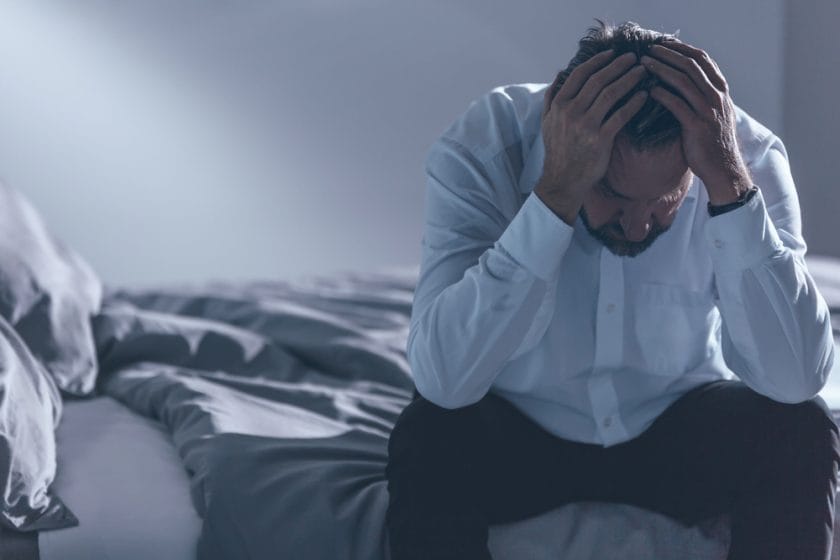
Heart racing. Stomach churning. Sweating from places you didn’t know you could sweat from. Fear of things that feel like they should be simple. Brain scattered. That creeping feeling that you can’t take on one more thing, that you can’t handle it.
That’s what anxiety can feel like for me. I’ve lived with it most of my life, and if any of that sounds familiar, I want you to know two things upfront: you’re not alone, and it’s treatable. So what is anxiety, exactly? And how do you know when it’s become something more than everyday stress?
Anxiety is the most common mental health condition in Australia. Officially, more than 1 in 4 of us (28.8%) will experience a clinically diagnosable anxiety disorder at some stage in our lives, though recent tracking shows general psychological distress is pushing this figure even higher. Right now, about 3.4 million Australians have experienced it in the last year alone, with young adults experiencing the highest rates, peaking at nearly 1 in 3 (31.8%) among those aged 16 to 24.
So if you’re one of them, you’re in very good company, even if anxiety has a way of convincing you that you’re the only one.
So what actually is anxiety?
Let’s clear something up first: understanding what is anxiety means recognising it isn’t just worrying, and it isn’t just stress.
Everyone feels anxious sometimes. Before a presentation, a job interview, a first date, an exam, that’s your body doing its job, gearing you up for something that matters. Those feelings usually pass once the moment does.
Anxiety becomes something more when the anxious feelings don’t go away, show up without an obvious reason, or start making it hard to get through your day. It can also be cumulative, building slowly over weeks or months until you realise the background hum has become the whole soundtrack.
What is an anxiety disorder?
What is an anxiety disorder, and how is it different from everyday stress? An anxiety disorder is a diagnosable mental health condition involving excessive anxiety and worry that is persistent, difficult to control, and interferes with daily life. There are several types of anxiety disorders, and they can look quite different from person to person:
- Generalised anxiety disorder (GAD) persistent, hard-to-switch-off worry about everyday things
- Social anxiety disorder (social phobia) intense fear of social situations or being judged
- Panic disorder recurring panic attacks, often with a fear of the next one
- Specific phobias strong fear of a particular thing or situation
- Agoraphobia anxiety about places or situations that feel hard to escape from
- Separation anxiety disorder excessive fear or anxiety about separation from people you’re attached to
And while it’s not a formal diagnosis, plenty of us are noticing a newer flavour: the low-grade anxiety that comes from being constantly online, with endless scrolling, 24/7 news, and a phone that never stops asking for our attention.

What are the signs and symptoms of anxiety?
Anxiety doesn’t just live in your head. It shows up in your body and your behaviour too. Symptoms of anxiety can look like:
In your mind:
- Feeling worried or on edge most of the time
- Finding it hard to calm down
- Racing, uncontrollable or obsessive thoughts
- Difficulty concentrating
- Feeling irritable or short-fused
In your body:
- A pounding heart or heart palpitations
- Rapid or trouble breathing, or chest pain
- Muscle tension
- Cold or sweaty hands
- Dry mouth
- Feeling more tired than usual
- Restlessness
- Trouble falling or staying asleep
In your day-to-day life:
- Avoiding situations, places or people that trigger anxiety
- Putting things off or struggling to start
- Withdrawing from friends, family or activities you used to enjoy
Here’s a useful rule of thumb: it’s completely normal to feel anxious before something big. But if your anxiety hangs around for weeks, feels out of proportion to what’s actually happening, or is stopping you from living your life, that’s worth paying attention to. If you’re frequently experiencing these symptoms, it’s a good idea to talk to your GP or a mental health professional.
What creates anxiety?
There’s rarely one single cause. What creates anxiety tends to be a mix of things stacking up. Common contributors include:
- Life stress work pressure, financial worry, relationship strain, or juggling too much for too long
- Caring for others carers of children, ageing parents or someone unwell often run on empty
- Poor sleep anxiety disrupts sleep, and poor sleep fuels anxiety, a frustrating cycle that’s hard to break
- Physical health hormones, thyroid issues and other physical conditions can all play a part
- Trauma past experiences, including a traumatic event, can shape how our nervous system responds to stress, sometimes years later
- Environmental factors social media and a nonstop news cycle mean we’re absorbing more worrying content than any previous generation
- Substance use alcohol and other substances can increase anxiety or make existing symptoms worse
It’s also worth knowing that for some people, long-standing anxiety turns out to be connected to something else entirely, like undiagnosed ADHD or autism. That was true for me. It’s one more reason a proper conversation with your GP or a mental health provider is so valuable: understanding why you feel anxious is often the first step to managing it.
Common myths about anxiety
There are a lot of anxiety myths and facts worth unpacking. Myths about anxiety can stop people from seeking the help they need, so let’s address a few of the most common ones:
Myth: Anxiety is just stress.
Anxiety and stress are related, but they’re not the same thing. Stress is usually tied to an external trigger and eases when the situation does. Anxiety disorders tend to persist even when the trigger is removed or isn’t obvious at all.
Myth: Anxiety isn’t a real illness.
Anxiety is a real illness with real physical symptoms and measurable effects on daily life. It’s recognised in the diagnostic and statistical manual of mental disorders and is one of the most common mental disorders in the world.
Myth: You should just breathe into a paper bag.
While breathing techniques and relaxation techniques can genuinely help regulate your nervous system during a panic attack, a paper bag isn’t a treatment recommendation. Evidence-based approaches like cognitive behavioural therapy and exposure therapy are far more effective for managing anxiety disorders long-term.
Myth: Anxiety means you’re weak.
Anxiety has nothing to do with character or strength. It’s a health condition influenced by genetics, life experiences, trauma and brain chemistry. Seeking help takes courage, not weakness.
8 things to try when anxiety is running the show
There’s no single fix for anxiety, and what works for your best friend might do nothing for you. Think of these as options to experiment with, not a checklist to complete. That would just be one more thing to feel anxious about.
- Start with a GP check-up. Rule out the physical stuff first. Hormones, thyroid issues and other physical health conditions can mimic or fuel anxiety symptoms. Your GP can also talk you through treatment options and set up a mental health treatment plan if you need one.
- Talk to a professional. Therapy works. For me, it’s been essential. Approaches like cognitive behavioural therapy (CBT), acceptance and commitment therapy (ACT) and EMDR give you actual tools to manage anxiety, not just somewhere to vent (though the venting helps too). Talk therapy through a mental health professional is one of the most effective treatments available.
- Move your body, your way. Exercise is one of the most evidence-backed coping strategies for anxiety. A walk with the dog, a swim, dancing badly in your kitchen. Do what’s good for you and what you’ll actually keep doing.
- Look after the basics. Unglamorous, but this is where the biggest shifts often happen. Decent sleeping habits, regular meals, less caffeine and a wind-down routine before bed. Small, consistent changes to your healthy lifestyle beat dramatic overhauls every time. You may also like our blog on Mental health tips.
- Slow your body down. Breathing exercises, breathing techniques, progressive muscle relaxation and body scans are ways of manually switching your nervous system out of alert mode. They feel awkward at first. Do them anyway.
- Unplug properly. Notice how you feel after 30 minutes of doomscrolling. Swap some of that time for something tactile and offline: a walk, a puzzle, the cinema, or the radical act of just being bored for a bit. Reducing digital consumption can genuinely help your overall well-being.
- Get it out of your head. Anxious thoughts get louder the longer they circle. Write them down, brain-dump into voice notes, or tell someone. A friend, your partner, a helpline. Anxiety loves isolation; saying things out loud takes away a surprising amount of its power. Support groups can also provide connection and shared understanding.
- Be kind to yourself. You wouldn’t tell a friend to “just stop worrying,” so don’t say it to yourself. Anxiety isn’t a character flaw. It’s a health condition, and managing it takes practice. Some days you’ll handle it well. Some days you won’t. Both are fine.

Anxiety is treatable, genuinely
If you take one thing from this article, make it this: anxiety is one of the most treatable mental health conditions there is. Effective treatments include psychological therapy (CBT is the most well-researched, but it’s not the only option), medication where appropriate, and lifestyle adjustments.
For most people, it’s a combination, and finding the right mix takes a bit of trial and error, which is completely normal. You don’t have to white-knuckle your way through life. Support exists, and it works.
When should you reach out for help?
Here’s my honest answer: earlier than you think.
In my 20s, my anxiety got to the point where I struggled to leave the house. Looking back, there were months, years really, of warning signs before it reached that point. I kept telling myself I was just stressed, busy, or struggling with adulting. I wasn’t. I was living with an anxiety condition that needed proper support.
You don’t need to wait until you’re at that point. Reach out if:
- Your anxiety has been hanging around for weeks and seems to be building rather than easing
- It’s starting to affect your work, your relationships, or your daily life
- You’re avoiding things you used to do without a second thought
- You’re using alcohol or other substances to take the edge off
- The people around you are noticing something’s up
- You’re experiencing thoughts of suicide or feeling like there’s no way forward
Asking for help isn’t an admission that you can’t cope. It’s the most practical thing you can do. The sooner you reach out, the sooner things can start to shift.
You don’t have to figure this out alone
If anxiety is making life harder than it needs to be, Holyoake can help. Our experienced counsellors provide support for people experiencing anxiety and other mental health challenges, in a space that’s warm, non-judgmental and genuinely down to earth.
- Looking for support? Check out our free one-on-one personal counselling program for adults.
- Living in the Wheatbelt? Find out more about our mental health services.
- Worried about a young person? We also offer counselling for children and adolescents.
You can also reach out to:
- Lifeline: Call 13 11 14 | Online chat | Text 0477 13 11 14
- 13YARN: 13 92 76 (support for Aboriginal and Torres Strait Islander people)
- Beyond Blue: 1300 22 4636 | Online chat
- Kids Helpline: 1800 55 1800 | Webchat (for ages 5 to 25)
FAQs
Anxiety is a natural human response to stress or perceived threat. When it’s persistent, excessive and begins to interfere with daily life, it may be an anxiety disorder, a diagnosable mental health condition. It can show up as physical symptoms like a racing heart, trouble breathing or muscle tension, as well as mental symptoms like constant worry, racing thoughts and difficulty concentrating.
An anxiety disorder is a mental health condition where anxiety is frequent, intense and difficult to control. Unlike everyday worry, anxiety disorders tend to persist even when there’s no clear trigger, and they can significantly affect daily life, relationships and work. Common types include generalised anxiety disorder, social anxiety disorder, panic disorder and specific phobias.
Everyone worries, before big events, during stressful periods, when life gets messy. Normal worry passes once the situation does. An anxiety disorder is when anxious feelings stick around for weeks or longer, show up without a clear reason, feel out of proportion to what’s happening, or start interfering with your daily life. If that sounds like you, it’s worth talking to your GP or a mental health professional.
Some of the most common myths about anxiety include: that it’s just stress (it’s not), that it’s not a real illness (it is), and that you should simply push through it or think positively. These myths about anxiety can prevent people from seeking help. Anxiety is a recognised health condition with evidence-based treatments that genuinely work.
Yes. Anxiety has very real physical symptoms. These can include a pounding heart, chest pain, trouble breathing, muscle tension, sweating, dry mouth and fatigue. Many people experiencing anxiety for the first time don’t realise these physical sensations are connected to their mental health, which is one reason it’s worth talking to a GP to rule out other physical conditions.
There are several types of anxiety disorders, including generalised anxiety disorder (GAD), social anxiety disorder, panic disorder, specific phobias, agoraphobia and separation anxiety disorder. Each involves excessive anxiety but can present with different symptoms and triggers. A mental health professional can help identify which type you may be experiencing and what treatment options are most appropriate.
Anxiety is highly treatable. Many people with anxiety disorders who receive the right support, whether that’s therapy, medication, lifestyle changes, or a combination, find their symptoms reduce significantly or resolve altogether. Others learn to manage anxiety so well that it stops running their life. Either way, things can get dramatically better, and the earlier you seek support, the easier that tends to be.
There are many effective coping strategies to help manage anxiety in everyday life. These include regular exercise, good sleeping habits, breathing techniques, relaxation techniques and reducing alcohol and caffeine. Cognitive behavioural therapy and other forms of talk therapy provide longer-term tools to address anxious thought patterns. Support groups and connecting with others can also help reduce the isolation anxiety often creates.
Sources
Australian Bureau of Statistics. (2023). National Study of Mental Health and Wellbeing, 2020–2022. abs.gov.au
Australian Institute of Health and Welfare. (2024). Prevalence and impact of mental illness. aihw.gov.au