What is an AOD comprehensive assessment?
This information is designed to help you understand what assessment involves at Holyoake, why counsellors ask detailed questions, and how the information you share is used to support safe, respectful and individualised care.
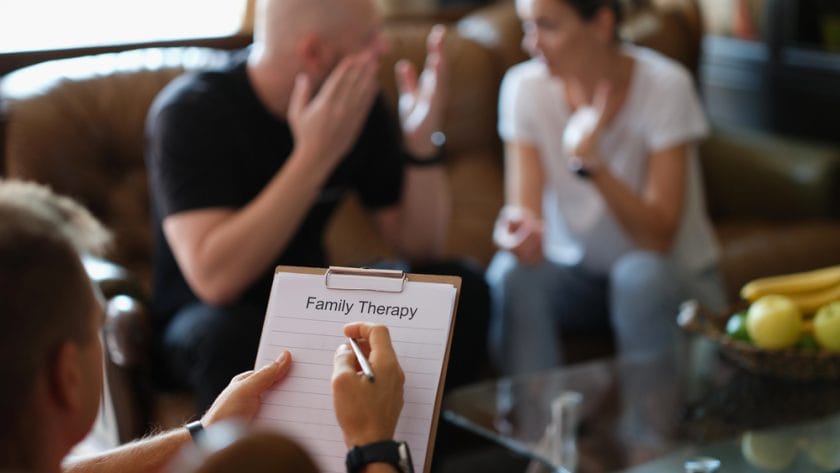
Taking that first step to talk to someone about your alcohol or drug use can feel daunting. But knowing what to expect makes a real difference. An AOD comprehensive assessment is a conversation, one where your counsellor listens carefully to understand your situation so they can figure out how to support you best.
In Western Australia, alcohol is the primary drug of concern, accounting for 46% of specialist treatment episodes in WA in 2024-25 (AIHW, 2026), and methamphetamine was the second most common principal drug of concern (26%).
International Overdose Awareness Day, held each year on 31 August, also highlights the importance of reducing stigma, preventing alcohol and drug-related harm, and creating opportunities for people to seek support without judgement.
The path to support often starts with a single honest conversation. Here’s what that looks like at Holyoake.
Why a comprehensive assessment matters
A comprehensive assessment looks at alcohol and drug use within the context of three interconnected factors: your substance use itself, the environment around you, and your own individual characteristics. This “drug, set and setting” framework, developed by researcher Norman Zinberg (1984), recognises that no two people’s experiences with alcohol or drugs are the same.
The goal is to build a complete picture of what’s happening in your life, not just what you’re using.
What the assessment covers
At Holyoake’s AOD counselling services, the assessment process typically happens in the first session, but could take two to three sessions. It’s done at your pace, and you decide how much you share.
Your counsellor may ask about your alcohol and other drug (AOD) use. Things like:
- What substances you’re using, how often, and how much
- Where and who you use with
- The reasons behind your use, including both the positive and negative consequences
- Your goals around future use
- Any previous treatment and how it went
- Feelings connected to your use, such as distress, shame or guilt
Alongside this, counsellors explore what’s sometimes referred to as “The 4 L’s” framework, and include problems with your “Liver, Lover, Legal and Livelihood”. This covers your physical health, relationships, any legal concerns, and your financial, employment and accommodation situation. Psychological wellbeing is also explored, including symptoms of anxiety or depression and any past experiences of trauma.
General assessment
To gain a deeper understanding of you and your personal circumstances, counsellors will explore:
- Social issues such as your family situation, marital relationships; children, accommodation, financial and employment status and legal issues.
- Psychological and mental health issues – e.g. depression and anxiety
- Strengths and personal resources
- Safety and risk issues, including any concerns related to suicidal thoughts, self-harm, family and domestic violence, or other situations where additional support may be needed.
You choose how much to share. The more open you can be, the more tailored the support will be. But there is no pressure. If you are not ready to disclose information, this will be acknowledged and respected.
A trauma-informed approach to assessment
Many people who seek alcohol counselling or drug counselling have also experienced trauma at some point in their lives. At Holyoake, the entire assessment process is embedded within a trauma-informed approach built on five principles:
- Providing safety
- Maximising trustworthiness
- Maximising choice and control
- Collaborating and empowering
- Understanding cultural and gender issues
This means your counsellor won’t push you to disclose more than you’re ready to share. If you do choose to talk about difficult past experiences, they will be handled with care and compassion. Cultural safety is also central to this. For Aboriginal and Torres Strait Islander peoples, flexible and culturally responsive approaches are essential.
Drug and alcohol screening tools used in the AOD sector
Standardised screening tools are a key part of the assessment process in clinical settings across WA. You might come across several of these:
AUDIT / AUDIT-C: The Alcohol Use Disorders Identification Test, developed by the World Health Organization, assesses harmful alcohol consumption and helps identify people who may benefit from early intervention.
ASSIST v3.1: The Alcohol, Smoking and Substance Involvement Screening Test covers a full range of substances and is widely used across AOD community services in Australia.
DUDIT: The Drug Use Disorders Identification Test focuses specifically on drug use patterns.
K10 / K5, GAD-7 / PHQ-9: These standardised tools measure psychological distress and help identify symptoms of anxiety and depression.
For young people, tools like the CRAFFT 2.1 are also used. This aligns with Holyoake’s Very Young People’s Program, which supports younger people with age-appropriate care. It’s also worth noting that addressing both AOD and mental health together, rather than in isolation, is now considered best practice across the sector.
What happens after the assessment?
The comprehensive assessment forms the foundation for your individual recovery plan. The WA Mental Health Commission’s Counselling Guidelines (Stone et al., 2019) recognise it as the essential starting point for any effective AOD intervention.
Depending on your situation, support might include individual counselling for adults, group programs such as SMART Recovery, the Men’s Group Program or the Women’s Group Program, or specialist services like the Cannabis Intervention Program or Alcohol Interlock Scheme counselling.
Therapeutic approaches used at Holyoake include motivational interviewing, cognitive behavioural therapy (CBT), acceptance and commitment therapy (ACT), narrative therapy, and family and systems counselling. Every decision about your treatment is made with you, not for you.
AOD comprehensive assessment in Perth and regional WA
Holyoake delivers services across Perth metro and regional Western Australia, including Victoria Park, Midland, Northam, Narrogin and Merredin, as well as outreach to the Wheatbelt, Goldfields-Esperance and beyond. Getting the right support starts with being truly understood.
All Holyoake services are free and confidential, and no referral is required. Whenever you’re ready, we’re here.
Ready to take the first step? Explore our services or call us on (08) 9416 4444 (Victoria Park) or (08) 9274 7055 (Midland).
Frequently asked questions
Your counsellor will ask detailed questions about your alcohol and other drug use, as well as your mental health, relationships, physical health and life circumstances. It’s a collaborative process and you’re in control of how much you share.
Most people complete their assessment in the first session, but it could take two to three sessions. This gives you and your counsellor enough time to build a clear picture without feeling rushed.
Yes. Everything you share with your counsellor at Holyoake is kept confidential. Our services are free and no referral is needed.
No. You do not need to stop using before coming in. Our counsellors understand that reducing or stopping use is not always an immediate step, and they will meet you where you are, without judgement.
Yes. You’re welcome to bring someone you trust. If you need an interpreter, please let us know when you get in touch and we will do our best to accommodate your needs.
References
Helfgott, S. (2009). Assessment In S. Helfgott & S. Allsop (Eds.), Helping change: The drug and alcohol counsellors’ training program. Perth WA: Drug and Alcohol Office, Government of Western Australia.
Stone, J., Marsh, A., Dale, A., Willis, L., O’Toole, S., Helfgott, S., Bennetts, A., Cleary, L., Ditchburn, S., Jacobson, H., Rea, R., Aitken, D., Lowery, M., Oh, G., Stark, R.,& Stevens, C. (2019). Counselling Guidelines: Alcohol and other drug issues (4th ed.). Perth, Western Australia: Mental Health Commission.
Zinberg, N. E. (1984). Drug, set, and setting. The basis for controlled intoxicant use. New Haven, CT: Yale University Press.